
 (412) 667-2539
  (412) 667-2539
Chimney Leak Repair: 6 Causes and How to Stop Water Damage

08.19.26

7 Minute Read
A chimney is one of the most common places for hidden leaks to develop, often going unnoticed until water stains appear on the ceiling nearby. Understanding the most frequent causes behind chimney leak repair needs helps homeowners catch problems early instead of dealing with costly water damage later. Pairing a healthy chimney with a well-maintained roof, the kind you get through trusted exterior craftsmanship, gives your home stronger protection against the elements year round. Knowing what to look for makes all the difference in avoiding bigger repairs down the road.
In this guide, you will learn:
- Why chimney leaks are more serious than they first appear
- Six common causes of chimney leaks and how to spot them
- Ways to enhance your chimney’s protection against future damage
- How professional repair compares to temporary DIY fixes
- Practical tips for keeping your chimney watertight long term
Why Chimney Leak Repair Matters
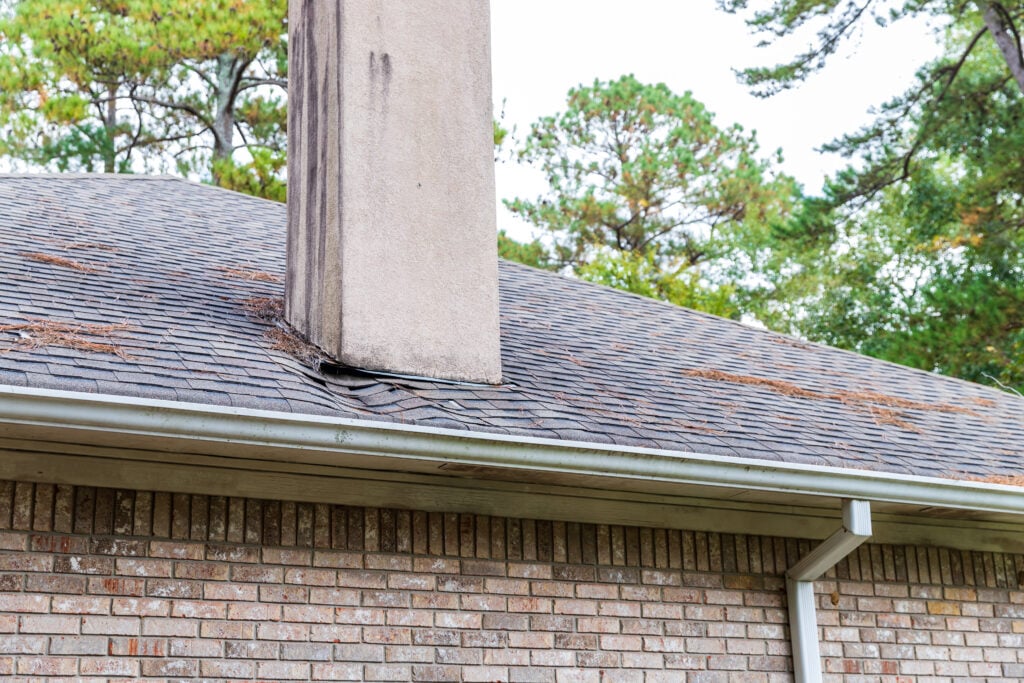
A leaking chimney rarely stays contained to one small area. Water that enters around a chimney can travel along rafters, seep into insulation, and damage drywall well before homeowners notice anything wrong. Addressing chimney leaks quickly protects far more than just the chimney itself.
- Structural protection: Water intrusion around a chimney can weaken surrounding framing and roof decking over time.
- Mold prevention: Persistent moisture near a chimney creates ideal conditions for mold growth in attics and walls.
- Masonry preservation: Left unaddressed, water damage can cause bricks and mortar to crack or crumble, especially during freeze thaw cycles.
- Fireplace safety: Moisture around a chimney can affect the flue liner and overall safety of the fireplace system.
- Cost control: Small chimney repairs are far less expensive than replacing damaged roofing, insulation, or drywall after prolonged leaking.
Homeowners in Apollo and surrounding areas often notice chimney leaks becoming more apparent after heavy spring rain or winter freeze thaw cycles, both of which put extra stress on aging flashing and masonry.
6 Common Causes of Chimney Leaks
Chimney leaks can stem from several different sources, and identifying the exact cause is key to a lasting repair. The list below covers the most frequent culprits homeowners run into.
1. Damaged or Missing Flashing
Flashing is the metal barrier that seals the joint between the chimney and the roof, and it is one of the most common sources of leaks. Over time, flashing can rust, crack, or separate from the chimney due to age or improper installation.
- Step flashing that has pulled away allows water to seep directly underneath
- Rust streaks on the chimney are often a sign flashing has been compromised
- Poorly installed flashing from a previous repair can fail sooner than expected
2. Cracked Chimney Crown
The chimney crown is the concrete or masonry cap that sits on top of the chimney, protecting it from water intrusion. Cracks in the crown allow water to seep directly into the chimney structure, often leading to interior damage over time.
- Small hairline cracks can widen significantly during freeze thaw cycles
- A damaged crown often leads to water stains inside the fireplace or flue
- Crown repair or resealing can often prevent more extensive damage
3. Deteriorated Mortar Joints
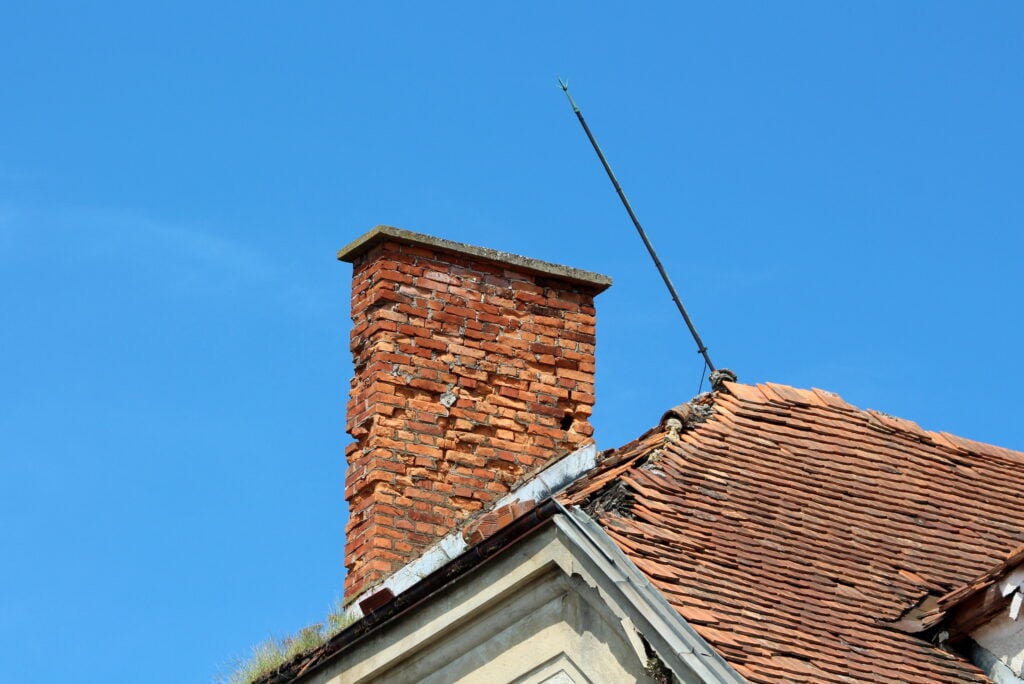
Mortar joints between chimney bricks naturally wear down over time, especially in older homes. Once the mortar begins to crumble, water can seep directly into the chimney’s structure, causing damage from the inside out.
- Spalling bricks, where the surface flakes off, often indicate long-term moisture damage
- Repointing damaged mortar joints helps restore the chimney’s water resistance
- Left unaddressed, deteriorated mortar can lead to more serious structural issues
4. Faulty or Missing Chimney Cap
A chimney cap prevents rain, debris, and animals from entering the flue directly. Without a properly fitted cap, water can pour straight down into the chimney during storms, leading to significant interior damage.
- Rusted or damaged caps should be replaced promptly
- A missing cap is one of the easiest issues to identify during an inspection
- Caps also help prevent downdrafts and improve fireplace efficiency
5. Condensation Buildup
Not all chimney leaks come from rainwater. Condensation can build up inside the flue, particularly in chimneys used for gas appliances, leading to moisture damage that mimics a traditional leak.
- Condensation is more common in chimneys with oversized or improperly sized flues
- A flue liner in poor condition can worsen condensation related issues
- This cause is often overlooked since it does not correlate directly with rainfall
6. Improper Chimney to Roof Connection
Sometimes the issue is not a single component but the overall way the chimney was integrated into the roofline during construction. Poor design or shortcuts taken during a past renovation can leave the chimney vulnerable to leaks regardless of how well individual parts are maintained.
- Additions or renovations near the chimney can disrupt proper water flow
- A professional assessment can identify design flaws that are not obvious at first glance
- Correcting this issue often requires more extensive repair than addressing flashing or mortar alone
Enhancing Your Chimney’s Protection Against Future Leaks
Beyond addressing existing damage, there are several ways to strengthen your chimney’s defenses against future water intrusion. Taking a proactive approach helps extend the life of both the chimney and the surrounding roof structure.
Waterproof Sealants
Applying a breathable waterproof sealant to masonry can significantly reduce water absorption without trapping moisture inside the bricks. This is especially useful for older chimneys with porous or aging masonry.
Routine Inspections
- Scheduling a chimney inspection at least once a year helps catch small issues early
- Post storm checks are especially valuable after high winds or heavy rain
- Combining chimney and roof inspections gives a more complete picture of your home’s protection
Proper Cap and Crown Maintenance
Keeping the chimney cap secure and the crown free of cracks is one of the simplest ways to prevent the majority of common leaks. These components take the brunt of exposure to rain and snow, so regular checks are well worth the effort.
Addressing Nearby Roofing Issues
Since chimney leaks are often tied to the surrounding roof, addressing worn shingles or damaged flashing near the chimney at the same time helps ensure a lasting repair rather than a temporary fix.
Homeowners in Apollo and surrounding areas who combine chimney maintenance with regular roof upkeep tend to avoid the more serious, expensive repairs that come from prolonged water exposure.
Professional Repair vs Temporary DIY Fixes
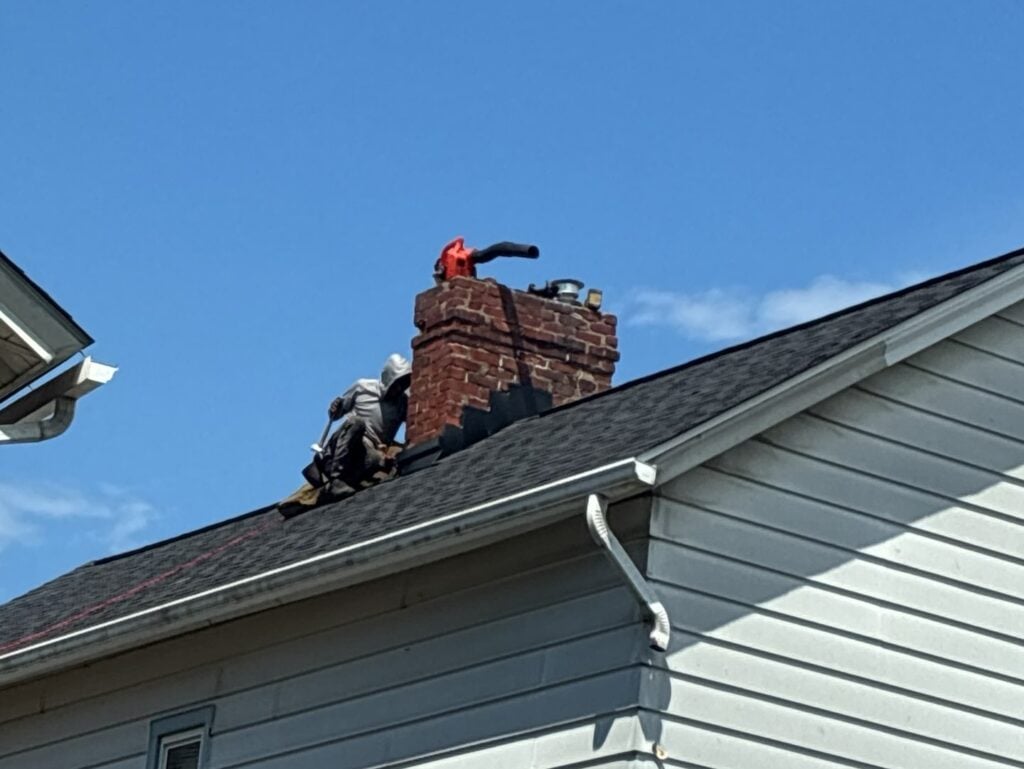
When a chimney leak is discovered, it can be tempting to apply a quick sealant or patch as a temporary fix. While this may buy some time, it rarely addresses the underlying cause and can sometimes make the real problem harder to diagnose later.
| Factor | DIY Temporary Fix | Professional Repair |
| Identifying root cause | Often overlooked | Thoroughly diagnosed |
| Materials used | General purpose sealants | Purpose built flashing, mortar, and sealants |
| Longevity of repair | Short term, often needs redoing | Long lasting when properly installed |
| Safety | Risk of improper roof access | Performed with proper safety equipment |
| Documentation | None | Detailed for insurance or future reference |
| Overall cost over time | Can lead to repeated repairs | Often more cost effective long term |
While a temporary patch might stop a drip for a little while, chimney leaks typically require a more thorough approach to fully resolve. Professional repair ensures the actual source of the leak is addressed rather than masked.
- Accuracy: Professionals can distinguish between flashing, crown, and mortar related issues
- Durability: Repairs are built to withstand seasonal weather changes rather than a single storm
- Peace of mind: A proper repair reduces the likelihood of recurring damage in the same area
Stop Chimney Leaks Before They Cause Lasting Damage
A chimney leak may start small, but the damage it causes can spread quickly through your attic, walls, and ceiling if left unaddressed. Identifying the cause early and investing in a proper repair protects both your chimney and the rest of your home’s structure.
Community Pro Roofing has helped homeowners throughout the region diagnose and repair chimney leaks at the source, preventing the kind of water damage that leads to bigger, more expensive problems. If you have noticed signs of a chimney leak or simply want peace of mind before the next storm, contact us today to schedule a thorough inspection and repair.
