
 (412) 667-2539
  (412) 667-2539
Hail Damage Roof: 7 Signs to Check After a Storm

06.12.26

8 Minute Read
Hail damage roof inspections are one of the most important steps homeowners can take after a severe hail storm. While some damage is easy to spot, hail can also create hidden problems that weaken roofing materials and shorten the lifespan of your roof. Even small hail impacts can damage roof shingles, flashing, gutters, and other roofing components, leaving your home vulnerable to roof leaks and costly repairs.
Knowing what to look for after a storm can help you identify issues early and determine whether professional roof repairs or a roof replacement may be necessary. If your property has experienced severe weather, scheduling storm damage roof repairs can help uncover hidden storm damage before it turns into more extensive property damage.
- Most vulnerable areas: Shingles, flashing, gutters, and vents
- Common problems: Dents, granule loss, cracks, and leaks
- Best time to inspect: As soon as conditions are safe after a storm
- Goal: Catch damage before it leads to water intrusion
Why Hail Damage Should Never Be Ignored
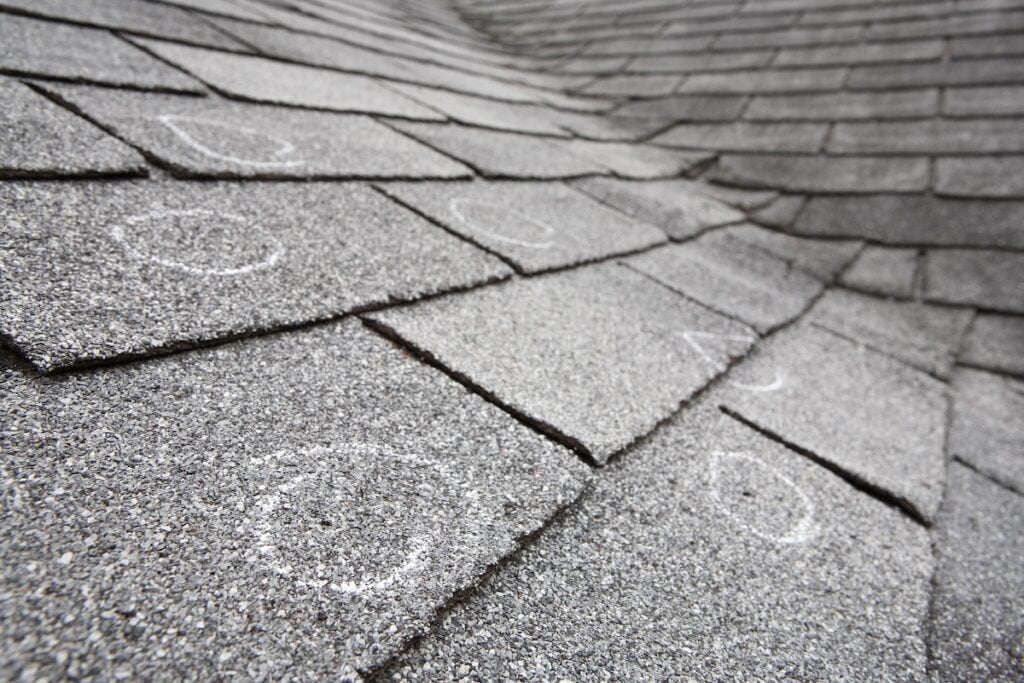
Not all hail damage causes immediate leaks, but that does not mean the roof is unaffected. Hail impacts can weaken roofing materials and reduce their ability to protect your home over time.
Small areas of damage may worsen with future storms, temperature changes, and normal wear. Even minor roof damage can compromise the roofing system and eventually lead to roof leaks, water damage, and more extensive roof repairs if left unaddressed. What appears to be minor roof damage today can develop into larger issues as the roofing system continues to age.
7 Signs of Hail Damage on a Roof
After a hailstorm, homeowners should look for several warning signs that may indicate damage to roofing materials.
1. Granule Loss on Shingles
Asphalt shingles are covered with protective granules that help shield the roof from UV rays and weather exposure. Hail impacts can knock these granules loose.
- Dark spots on shingles: Areas where granules have been removed
- Granules in gutters: Excess buildup after a storm
- Uneven shingle appearance: Indicates possible impact damage
Granule loss is one of the most common signs of hail damage on asphalt shingles and can significantly shorten their lifespan. It is especially common on an aging asphalt shingle roof and may expose the underlying roofing materials to accelerated wear.
2. Dents or Bruising on Shingles
Hail often creates soft spots or dents that may not be visible from the ground. These bruised areas can weaken the roof surface and reduce long-term protection.
- Depressed areas: Indicate impact damage
- Bruised shingles: May feel soft when inspected closely
- Compromised protection: Increases the risk of leaks over time
Bruising can weaken the integrity of roofing materials even if the surface initially appears intact.
3. Cracked or Split Shingles
Larger hailstones can crack or fracture roof shingles, especially on older roofs or an aging asphalt shingle roof. Damaged shingles often create openings where moisture can enter the roofing system.
- Visible cracks: Direct evidence of hail impact
- Damaged or missing shingles: May allow water penetration and increase the risk of future leaks
- Reduced weather protection: Increases leak potential
Damaged shingles should be repaired quickly to prevent moisture intrusion.
4. Damaged Roof Flashing
Flashing protects vulnerable roof areas such as chimneys, skylights, and vents. Hail can dent or loosen flashing materials, creating opportunities for leaks.
- Visible dents: Common on metal flashing
- Loose sections: May create openings for water
- Seal failure: Can lead to roof leaks
Flashing damage often occurs even when shingles appear relatively unaffected.
5. Gutter and Downspout Damage
Gutters are frequently one of the easiest places to spot hail damage after a storm. Because they are exposed and made from softer materials, dents are often visible immediately.
- Dents in gutters: Visible signs of hail impact
- Damaged downspouts: May affect drainage performance
- Loose connections: Caused by severe weather conditions
Dented gutters often indicate that the roof surface experienced similar impact damage during the hail storm.
6. Damage Around Roof Vents and Skylights
Roof penetrations often take direct impacts during hailstorms. These areas should be inspected carefully because they are common leak points.
- Cracked vent covers: Common after severe storms
- Damaged skylight components: May allow moisture intrusion
- Seal deterioration: Increases leak risk
Even small cracks around vents or skylights can eventually lead to water damage inside the home.
7. Interior Signs of Roof Damage
Sometimes the first signs of hail damage appear inside the home rather than on the roof itself. Interior moisture issues often indicate damage has already progressed.
- Water stains on ceilings: May indicate a developing leak
- Damp attic insulation: Suggests moisture intrusion
- Musty odors: Can signal trapped moisture or mold growth
Interior warning signs often indicate that roof damage has already progressed beyond the exterior surface.
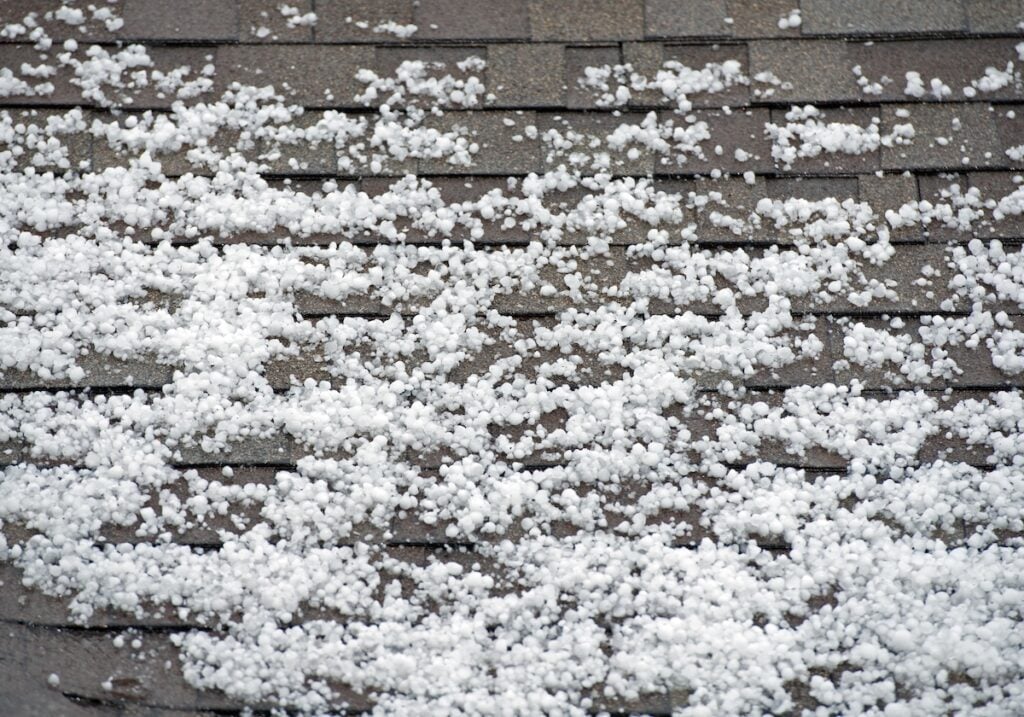
How to Inspect a Roof After a Hailstorm
A basic visual inspection can help homeowners identify potential storm damage before it becomes a larger problem. While some issues can be spotted from the ground, others may require a professional evaluation.
- Check gutters and downspouts: Look for dents and granule accumulation
- Inspect roofing materials from the ground: Watch for damaged shingles or missing shingles
- Examine flashing and vents: Look for visible impact marks
- Check the attic: Search for moisture, stains, or daylight entering the roofing system
- Document damage: Take photos for insurance purposes if needed
Avoid climbing onto the roof unless it is safe to do so and you have proper experience.
Factors That Affect Hail Damage Severity
Not every hailstorm causes the same level of damage. Several factors influence how severely a roof may be affected.
| Factor | Impact on Damage |
| Hail size | Larger hail typically causes more severe damage |
| Wind speed | Increases impact force during storms |
| Roof age | Older roofs and aging roofing materials are often more vulnerable |
| Roofing material | Asphalt shingles and metal roof systems respond differently to hail impacts |
| Storm duration | Longer exposure increases damage potential |
According to the Insurance Institute for Business & Home Safety, IBHS studies how roof age affects performance in different climates through ongoing field studies and partnerships with leading universities — and research consistently shows that older roofing materials are significantly more vulnerable to hail impact, making roof age one of the most important factors in assessing damage severity after a storm.
What to Do If You Suspect Hail Damage
If you believe your roof may have been damaged by hail, acting quickly can help prevent additional problems. Early action also helps simplify the inspection and insurance process.
- Schedule a professional roof inspection: Identify visible and hidden hail damage
- Contact a professional roofing contractor: Schedule a storm damage inspection
- Document affected areas: Take photos and notes
- Document property damage: Helpful if filing an insurance claim
- Check for active leaks: Address water intrusion immediately
- Review insurance coverage: Determine whether storm damage may be covered
- Complete repairs promptly: Prevent further deterioration
A roofing professional can help determine whether repairs or a roof replacement are necessary.
Frequently Asked Questions About Hail Damage Roof Inspections
Homeowners often have questions about identifying storm damage and determining when professional help is needed. Understanding the signs of hail damage can help prevent costly repairs and protect your home.
Can hail damage a roof without causing leaks?
Yes. Hail can bruise shingles, remove protective granules, and weaken roofing materials without creating immediate leaks. Damage may become more noticeable over time.
How soon should I inspect my roof after a hailstorm?
It is best to inspect your property as soon as weather conditions are safe. Early detection can help prevent additional damage from future storms.
Does small hail damage roofs?
Even smaller hailstones can damage asphalt shingles, flashing, and gutters, especially if winds are strong or the roof is older.
Will homeowners insurance cover hail damage?
Many policies cover hail-related roof damage, but coverage varies by provider and policy. It is important to review your insurance details and document any damage.
How can I tell if hail damage requires a roof replacement?
The extent of the damage, roof age, and affected materials all play a role. A professional inspection can determine whether repairs or replacement are the best option.
Community Pro Roofing: Storm Damage Experts You Can Trust
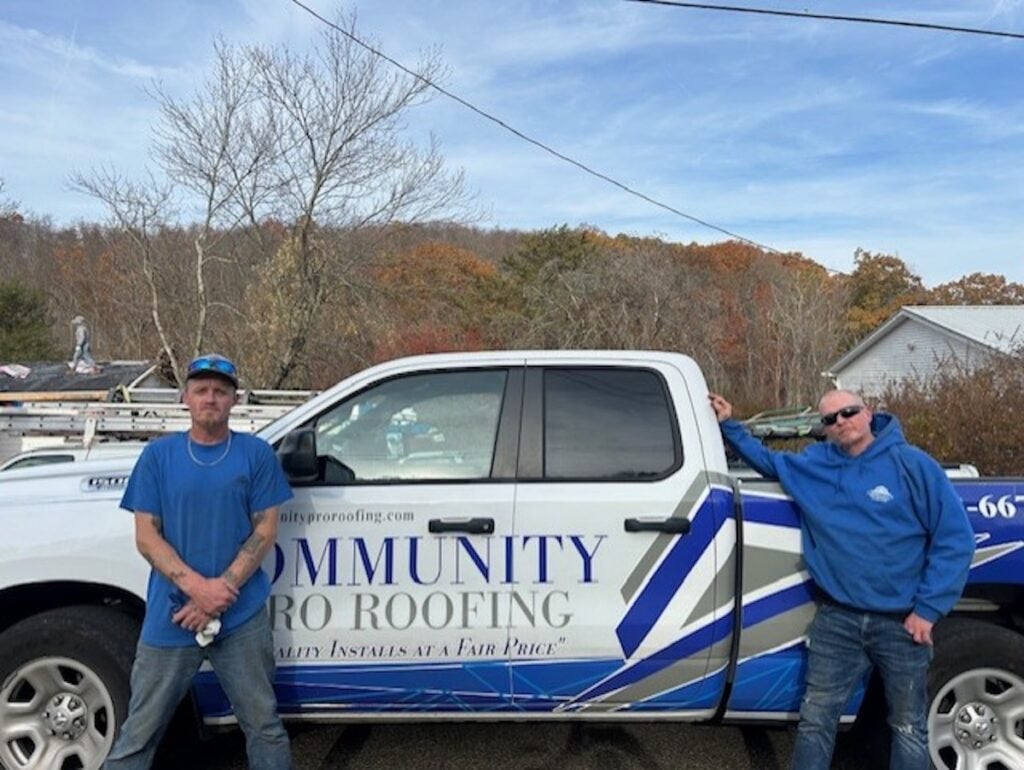
Hailstorms can leave behind damage that is not always obvious from the ground. At Community Pro Roofing, we provide thorough roof inspections to identify storm-related issues and recommend the right solution for your home.
Our experienced roofing professionals can identify hidden hail damage, assist with insurance claim documentation, and recommend the best solution for your home, whether that involves targeted roof repairs or a full roof replacement.
Whether you need repairs, a storm damage assessment, or a complete roof replacement, our roofing company is here to help. Contact our team to schedule a storm damage inspection and protect your home after the next storm.
